
Italy’s premier wine preview showcases a vintage of elegance and restraint

Montalcino opened its historic cellars and welcomed the world once again for the 34th edition of Benvenuto Brunello, held November 20-24 at the Chiostro di Sant’Agostino. As Italy’s longest-running wine preview event, this year’s gathering brought the international wine community together to taste the highly anticipated Brunello di Montalcino 2021, alongside Brunello Riserva 2020 and Rosso di Montalcino 2024. With 122 wineries presenting their wines and approximately 100 journalists and industry professionals in attendance, the event underscored Brunello’s enduring status as one of Italy’s most prestigious wine denominations. The international presence was particularly notable, with nearly half of the attending journalists coming from abroad, reflecting Brunello’s truly global appeal. The event maintained its successful dual format pioneered in previous years. The first three days (November 20-22) were reserved for trade and media, featuring technical tastings. The final two days opened to Italian and international wine lovers, restaurant professionals, wine merchants, and sommeliers for walk-around sessions where they could meet producers directly.
Brunello’s continued market strength

Brunello di Montalcino has achieved what few wine denominations can claim: sustained growth in both prestige and commercial success over the past half-century. The denomination’s popularity continues to expand on world markets, driven by rising average prices, stable volumes, and growth in strategic markets. Recent data from Wine Intelligence confirms Brunello’s exceptional brand recognition in Italy, where it is known by 2 out of 3 consumers, surpassing in notoriety even neighboring Tuscan appellations. Rosso di Montalcino continues to show impressive growth. Following the expansion of vineyard area, bottlings in the first ten months reached nearly 4 million State Seals issued, marking a 29% year-on-year increase. This secondary appellation has become an important entry point for consumers discovering the territory while also serving as an earlier-drinking expression of Montalcino’s terroir. The Consorzio announced plans to launch a new promotional program for the denomination in 2026, involving collective participation in primary markets, particularly the United States, as well as additional strategic destinations. The aim is to diversify business opportunities for producers as much as possible, ensuring the denomination’s continued growth across multiple markets rather than relying too heavily on any single region.
Understanding the 2021 vintage
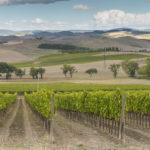
One of the highlights of the event was the presentation of the 2021 vintage characteristics through Brunello Forma, the Consorzio’s comprehensive technical analysis program. Now utilizing data from 60 weather stations (a 54% increase over 2020) and comparable to the 30-year historical average (1996-2025), the analysis provided detailed insights into what shaped this distinctive vintage. The 2021 growing season was defined by two main weather anomalies: a notably colder spring than historical norms, especially during March, April, and May, and a significantly warmer, drier September. What made 2021 particularly unusual was the complete absence of rain between late August and early September, a pattern atypical for the Montalcino area. The vintage narrative began dramatically on April 8th with one of the most severe spring frosts of the past two decades. Following an early budbreak prompted by rapidly increasing temperatures from March 24th onward, the sudden plunge in minimum temperatures, exacerbated by a strong North Atlantic cold front, delayed the entire vegetative cycle and significantly reduced yields in some areas. Summer brought a pronounced water deficit rather than thermal excess. Despite the persistent drought, maximum temperatures remained moderate, with only brief heatwaves observed. This restraint proved crucial to wine quality. The marked diurnal temperature variation, combined with the absence of prolonged heat stress, allowed the grapes to maintain freshness and aromatic complexity even under challenging conditions. Harvest commenced in the second half of September under clear skies and concluded rapidly in early October, with all fruit brought in before the first significant rainfall arrived after October 5th. The resulting wines reflect a vintage shaped by discipline and precision: approachable yet structured, elegant yet concentrated, offering immediate appeal while promising graceful evolution with time
Tasting impressions of the 2021 vintage
Having focused primarily on tasting most of the Brunello di Montalcino 2021 samples, the overall impression is of a vintage that shows approachable drinkability, supported by good structure and finesse. The wines reflect the character of a season defined by moderate temperatures, marked diurnal variation, and water stress without extreme heat. The result is a Brunello that balances freshness with concentration, offering elegance and refinement that will continue to evolve beautifully with time.
A unique territory for the pure expression of Sangiovese
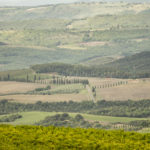
The Brunello production area corresponds to the historical limits of the Municipality of Montalcino, a picturesque village just 40 km south of Siena, surrounded by vineyards, olive groves, and historical sites. The Montalcino district comprises 3,500 hectares of vineyards registered under the DOC and DOCG designations. The production area is shaped like a square around the town, and it’s fascinating to observe the microclimate differences in such a compact territory.This is a dry land encompassing a multitude of microclimates and soils. Generally speaking, grapes located in the cooler northern areas of the DOCG tend to ripen more slowly. These vineyard sites are located at higher elevations (but never over 600 meters) and are planted in gravelly Galestro soil. On the south side, the grapes are hosted in quite another environment. The soils are richer, like clay, the sunlight is more intense, sea breezes blow from the Tyrrhenian Sea, and the wines result more powerful. Furthermore, the presence in the south of Mount Amiata (1,740m) has an important influence by shielding the grapes from strong atmospheric phenomena and providing breezes that help keep the climate dry and the vines healthy.
The Sangiovese grosso: the fingerprint of Brunello
Brunello di Montalcino is a 100% Sangiovese-based wine that needs long periods of aging before reaching its quality peak, but once achieved, it represents a true champion of balance, complexity, and maturity. Sangiovese is the only grape allowed in the Brunello di Montalcino DOCG. It is a very sensitive native grape and one of the highest quality varieties that needs careful practice, impeccable attention to its production process, harvest, and vinification. It is a variety that shows off fragrant notes of cherry and plum, hints of spice, and an extraordinary texture. The natural tannic structure and high acidity levels of Sangiovese are the main factors of its longevity. It performs differently in each site and changes depending on its environment. The terroir combined with the play of time has always given elegant wines with perfectly balanced, rich bouquets. Brunello di Montalcino never fails to surprise. It is an example of impressive year-by-year quality persistence, and every vintage reveals a different profile of the beauty of the Sangiovese variety, showcasing a different nuance of its character each time.
Montalcino: a year-round wine destination
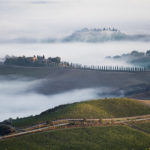
Montalcino was historically a very important stop on the Via Francigena, a road that ran from England to Rome, and therefore it welcomed and hosted important men of power, nobles, politicians, and popes. The great wines of Montalcino were crafted to satisfy the illustrious visitors traveling to reach the Eternal City, and that’s why the hamlet has always displayed absolute quality winemaking for centuries.Montalcino today is internationally affirmed as an authentic, high-end wine destination. Visiting Montalcino is not just about tasting. It has to do with the history of its people and helps you understand why wine is so integrated into the culture of its inhabitants, who, from generation to generation, continue to pass on their passion and know-how. While Benvenuto Brunello represents a highlight in Montalcino’s calendar, the region offers exceptional wine experiences throughout the year. Many of the 122 participating wineries welcome visitors year-round, though reservations are essential. Experiences range from basic tastings to elaborate tours including vertical tastings of multiple vintages, vineyard walks with detailed explanations of different terroirs, barrel tastings in historic cellars, and food and wine pairing experiences. Some estates offer helicopter tours of the denomination and harvest experiences during September and October.
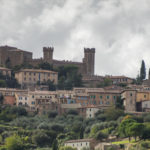
The territory hosts several notable events beyond Benvenuto Brunello. The Brunello Crossing in February features competitive and recreational hiking trails through the vineyards, offering routes of varying difficulty from 10 to 44 kilometers. The Jazz & Wine Festival in July combines world-class jazz performances with wine tastings in historic settings. L’Eroica in October, the famous vintage bicycle race traversing the scenic white roads of Tuscany, includes a special route through the Brunello vineyards. Honey Week in September celebrates local honey production with tastings and pairings with Moscadello di Montalcino. The surrounding UNESCO World Heritage landscape of Val d’Orcia offers activities for every interest, from hiking and biking trails to the famous cypress-lined roads featured in countless photographs and films. Historic abbeys, including Sant’Antimo, where Gregorian chants still echo through the stone halls, natural hot springs in nearby Bagno Vignoni and San Filippo, and the artistic treasures of nearby Pienza and San Quirico d’Orcia provide rich cultural experiences. The town welcomes many visitors, and the care of its hospitality has become just as important as the attention to its wine. Ancient buildings and modern B&Bs, luxurious accommodations within the wine estates integrated with working wineries, and impeccable hotels offer diverse lodging options to suit different preferences and budgets.