
Garda Wine Stories: A Region Looks Beyond the Glass
Lake Garda has always been more than scenery for its wines. The lake shapes the breezes that cool the vineyards, the light that ripens the grapes, and the mild winters that let olive trees grow alongside vines. This June, the Consorzio Garda DOC spent three days on the lake making that connection explicit, gathering journalists and wine lovers for Garda Wine Stories 2026, a series of tastings and conversations built around one idea: you cannot understand Garda wine without understanding Garda itself.
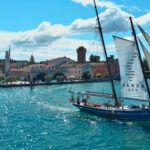
That idea took a name during the event. The Consorzio launched Garda 360, a project meant to tell the story of the territory as a whole, its wine, its landscape, its food, and the communities who live there, rather than treating each piece on its own. For a wine region defined almost entirely by its lake, the approach feels overdue. Much of the conversation this year turned to a shift already underway in wine drinking: the rise of no- and low-alcohol wines. Consumers in the UK and Germany are increasingly reaching for lighter, lower-alcohol options without giving up on quality or a sense of place, and Garda DOC has responded directly. A new low-alcohol version of Garganega, the denomination’s signature white grape, now sits at 9% ABV, and a new “Cremant” designation gives the region’s traditional-method sparkling wines a name recognized well beyond Italy’s borders. The most memorable moment of the week pointed toward where the region is headed next. Guests were led through a guided meditation before tasting a sparkling wine aged underwater in the lake itself, a wine that spends months submerged in silence and darkness before it returns to the surface to “breathe” again. It is an early preview of a larger project planned for next year, one built around the idea that a wine’s relationship to water can be as much a part of its story as its relationship to soil. The afternoon also included a boat tour of the lake and a conversation about protecting the aquatic species that share these waters, a reminder that a healthy lake and a healthy vineyard depend on each other. That is the thread running through Garda 360: wine tourism and the life of a place, told together instead of apart. For a denomination built entirely around one of Italy’s most visited lakes, it is a natural next step.
The Denomination
Garda DOC was first recognized in 1996 to give identity to the varietal wines produced across ten historic zones of the Garda area: Valtenesi, San Martino della Battaglia, Lugana, Colli Mantovani, Custoza, Bardolino, Valpolicella, Valdadige, Durello, and Soave. The Consortium received ministerial recognition in 2016 and has operated erga omnes since that year, today representing 250 users across the supply chain.
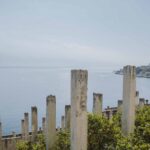
Vine cultivation in the area dates to the Iron Age, with evidence that Celts, Etruscans and Greeks practiced viticulture here, a tradition carried forward through the Roman era, as documented by wine-press remains found near Verona. The geographic term “Garda” was first used to label wines from this territory in 1968. Starting in the 2025 harvest, an update to the production code introduced new wine types and technical revisions. Müller Thurgau, in still, frizzante and spumante versions, and Garda Rebo, as a still red, now form part of the denomination. The spumante and frizzante categories added varietal specifications for Garganega and Chardonnay. Garganega, the denomination’s leading native white variety, can now be produced in a low-alcohol version at 9% ABV starting with the 2025 harvest, making Garda DOC the first Italian DOC to dedicate a still wine to a low-alcohol category. The rosé spumante and frizzante versions gained a “Corvina” specification, and a copper-toned rosé version of Pinot Grigio was also introduced. For traditional-method sparkling wines, the code added the “Cremant” designation for white and rosé wines, bringing the denomination’s production closer to established European sparkling wine standards. Among the changes to the production code, the disciplinare now extends into a small, well-suited area of morainic hillside in the municipality of Castenedolo, in the province of Brescia. Paolo Fiorini, president of the Consorzio Garda DOC, framed the update this way: “Our mission is clear: to give voice to a unique territory, one that has managed to combine winemaking tradition with a modern, international outlook.”
The Wine
Garda DOC covers a wide range of styles built on eight core grape varieties, four white and four red. The white varieties are Garganega, Trebbiano (in the Trebbiano di Soave and Trebbiano di Lugana forms), Chardonnay and Pinot Grigio; the reds are Corvina, Marzemino, Merlot and Cabernet Sauvignon, with local varieties completing the ampelographic range.
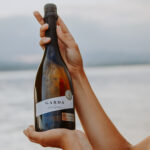
Approved wine types include still varietal wines from Garganega, Chardonnay, Pinot Grigio, Pinot Bianco, Riesling, Sauvignon, Cortese, Cabernet, Cabernet Sauvignon, Merlot, Corvina, Pinot Nero, Marzemino, Müller Thurgau and Rebo, alongside blended Bianco and Rosso wines, Charmat-method sparkling whites, and Cremant and traditional-method sparkling whites. Total production reached 23,380,280 bottles in 2025. Garda Bianco, at more than 2 million bottles, grew 46% over 2024. Garda Pinot Grigio held the varietal leadership at 8,100,000 bottles, while Garda Chardonnay eased slightly to 3,900,000 bottles. Garda Garganega held steady around 4,000,000 bottles, sparkling Garda Bianco in frizzante and spumante versions settled around 3,000,000 bottles, and reds led by Garda Merlot and Cabernet stayed constant around 1,000,000 bottles. The denomination’s vineyards covered 2,358 hectares claimed in 2025, yielding 371,579 quintals of grapes. The wines carry the marks of their terroir: soft texture, freshness, and mineral drive drawn from morainic soils shaped by glacial deposits over millennia.
The Territory
Garda DOC’s vineyards sit between Lombardy and Veneto, across the provinces of Verona, Brescia and Mantova, ringed by mountains and facing Italy’s largest lake basin. The consorzio describes the area as a piece of Mediterranean climate at the foot of the Alps: morainic hills shaped by glaciation, olive and citrus groves, and a landscape marked by dry stone walls, rural hamlets, and country churches that have stayed largely intact.
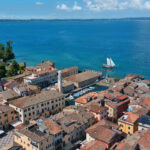
The zone divides into four broad geographic areas, the east, south and west shores of the lake, and the territory’s eastern wing. Soils are morainic agglomerates, formed from moraine debris, rock, sand and clay deposited by the glacier that carved out the lake basin, later shaped by time, water and vegetation into today’s hills. These soils show low pedological differentiation, are generally stony and rich in skeleton, strongly calcareous but with low active limestone, and hold water poorly due to coarse texture and weak structure. The climate is temperate subcontinental, sub-Mediterranean in character, with summers that stay moderate and winters that remain relatively mild, and rainfall spread evenly enough across the year to avoid summer drought stress. Lake Garda itself moderates both summer heat and winter cold, and its breezes, intensified by the proximity of the mountains, move steadily through the vineyards. Two effects follow from the region’s evolving mesoclimate: rising sugar levels in the grapes, tied to warming temperatures, and increased metabolic activity in the vine, which the Consorzio monitors closely to protect wine quality as conditions shift.
Where to Stay and What to Do

The June program traced a route worth repeating on a private visit. Hotel Veronesi La Torre in Dossobuono anchors the Verona side of the territory. The Dogana Veneta in Lazise, a restored customs building on the lake, hosts much of the Consorzio’s tasting and conference activity and is open to visitors during Garda DOC events.Rocca di Lonato, with its Casa del Podestà, sits above Lonato del Garda on the southern edge of the denomination and hosts walk-around tastings with DOC producers. The Riviera Terrace in Garda, on the eastern shore, o ffers lakeside dining paired with the denomination’s wines. A motorboat tour of the lake is a straightforward way to see the morainic hills and shoreline that define the terroir from the water, and freediving-guided tastings, of the kind led by Dario Boschetto during the 2026 event, point to where the Consorzio’s hospitality offer is heading next.
The Producers
Bottenago | www.bottenago.it
Bottenago farms in the hills of the Valtenesi, on the southwestern shore of the lake, with organic production at the center of its work. The estate focuses on red, white, and rosé wines, from its Groppello DOC red to its Riviera del Garda Classico Chiaretto rosé and its Garda DOC range, including a metodo Charmat sparkling wine made from Pinot Bianco, Pinot Nero, Chardonnay, and Trebbiano. The winery describes its approach as a return to origin, working the land to recover flavors and colors tied to the Valtenesi’s older winemaking tradition. Visits and tastings can be arranged directly through the estate.
Cottini (Montezovo) | www.cottinivini.com
The Cottini family has grown grapes since 1925, when Carlo Cottini founded the first family farm; the estate is now in its fourth generation under Diego Cottini and his sons Michele and Mattia, based in Fumane in the Valpolicella. The property has grown from 20 to 140 hectares and has been certified organic since the 2018 harvest, following a shift toward reduced chemical inputs and organic-only fertilization in the vineyards. Cottini was the first winery in the world to certify under the Biodiversity Friend standard and remains an active member of the Wine Research Team, a group of 35 estates working on sustainable viticulture research. Its Garda DOC sparkling wine, Hypsos, is produced under the Montezovo label.
Corte Quaiara | www.cortequaiara.it
Corte Quaiara sits in the morainic hills of San Giorgio in Salici, in the municipality of Sona, on land farmed by the Montresor family for four generations. Giovanni Montresor took over his maternal grandfather’s estate after working for a larger Veronese winery, restarting production with 13 hectares planted to both traditional and less common varieties for the area, including Pinot Nero, Goldtraminer, Pinot Grigio, Chardonnay, Syrah, and old vines of Garganega and Oseleta. Yields stay low, work in the vineyard is largely manual, and total output runs around 25,000 bottles a year. The estate is certified under the Biodiversity Friend standard and belongs to the Federazione Italiana Vignaioli Indipendenti.
Oselara | www.oselara.it
The Pedassi family has run Oselara since 1992, farming 13 hectares split between Pozzolengo and Peschiera del Garda in the historic heart of the Lugana zone, yielding around 160 tonnes of grapes a year. The estate keeps yields low, avoids chemical herbicides in favor of row-by-row cultivation, and uses natural fertilizers, alongside hand-picked harvests and careful grape selection at picking. Its Garda DOC sparkling wine, 90 Passi, is made from Turbiana and Chardonnay, hand-harvested in late August and finished with a 90-day second fermentation under the Charmat method. Tastings and cellar visits are available by appointment.