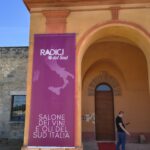
An interview with Nicola Campanile, creator and organiser of the Radici del Sud event which showcases the wines and olive oils of southern Italy

This year the 21st edition of Radici del Sud, the annual event dedicated to the wines and olive oils of southern Italy, was held. How has the event evolved over the years?
Radici del Sud started out in 2005 with the aim of promoting the quality wines of southern Italy and communicating the area’s rich winemaking traditions through a competition that involved a national jury and a local one. Four years later the format expanded to cover the whole of southern Italy, including the regions of Abruzzo, Basilicata, Calabria, Campania, Molise, Puglia, Sardinia and Sicily as well as adding activities to the programme with tours. In addition to journalists, bloggers and wine bar and restaurant managers, importers interested in discovering the wines of southern Italy are also invited. For the past five years, the event promotes the olive oils of southern Italy as well as the wines, attracting professionals from all over the world and increasing the visibility of our products on an international scale. The six days of the event include tours and tastings, seminars and sales meetings as well as two days of blind tastings for the international and national juries. One of the strong points of Radici del Sud is the ability to create authentic relationships and lively debates with the hundreds of high-profile guests, both Italian and international, Masters of Wine, journalists, importers and other professionals who have taken part in the various editions and helping to grow interest in the wines and olive oils of southern Italy. Radici del Sud continues to be the only event which focuses on the wines and olive oils of southern Italy.
The event takes place in Gioia del Colle – what are the reasons behind this choice of location?
The choice of location was both for the architectural value of the building and for its central location as well as the excellent transport network around Gioia del Colle. The former distillery building was recently restored and actually inaugurated with the 20th edition of Radici del Sud. The spacious interiors of the former Paolo Cassano distillery allows us to welcome participants in the best possible way and base all the activities in one place, which had not been the case in previous years. Moreover, the fact that the motorway exit is just 200m away has simplified things for visitors, producers and participants.
Let’s talk about the wines of Puglia. Over the years, the region’s wines have made a decisive turn from quantity to quality. Do you think that the Puglia wine scene now receives the respect it deserves?
The move from quantity to quality in Puglia’s wine scene is one of the most interesting chapters in the history of Italian winemaking but it is far from over. There is more to be done especially in terms of market positioning and strategy management. Over the years varieties such as Primitivo, Negroamaro and Nero di Troia have become highly respected and at the same time numerous minor native vines have been resuscitated – for example Susumaniello, Bombino Nero, Minutolo and Bianco di Alessano – while the region’s Traditional Method sparkling wines and rosés have grown incredibly with recognition on a global scale. From this point of view, Puglia is very much a player among the ranks of important winemaking regions. The current challenge however is the ability to deal with a huge potential production without lowering its worth. Puglia continues to be one of Italy’s most prolific producers of wine and large stocks remain unsold. This leads to a risk of lowering prices. Regional authorities and associations are facing the question with strategies aimed at creating a new stage of the so-called quality revolution. So, in short, the wines of Puglia have most definitely improved in quality yet the overall perceived quality still needs to catch up.
In recent years figures regarding summer tourism in Puglia have increased astoundingly. Has wine tourism in the region grown in a similar way?
Yes, wine tourism in Puglia has grown a great deal but in a different way to the classic summer holiday scene. While beach holidays peak during the busy months of July and August, wine tourism is becoming a major player in the challenge of increasing out of season tourism and internationalisation among travellers to the region. Puglia is actually the third Italian region chosen for food and wine-themed holidays with 32% of this category of visitors choosing the region. The majority of visitors to the region’s wineries opt to visit during the spring, and over recent years the rate of foreign visitors has grown by 25%. Another development is that wineries are offering new and innovative experiences and visitors are increasingly tempted to leave the busy coastal areas to explore the interior and places like Castel del Monte, the Valle d’Itria and northern Salento. Official figures report that an impressive 75% of tourists in Puglia visit at least one wine, oil or food producer during their stay.
Which aspects could be improved for the growth of wine tourism in Puglia?
Undoubtedly more efficient digitalisation and better infrastructures would help. Online booking systems need upgrading and streamlining – this goes for wine tourism experiences in much of Italy. In addition, many visitors have trouble finding their way to the wineries as clear signposting is often lacking and public transport is a problem. It can be extremely difficult to reach a winery in the countryside by bus or by train. Luckily some private and consortium-led network initiatives are being activated. As for opening times, although the number of wineries opening their doors at the weekend is growing, most small to medium-sized producers are closed on Sundays when many prospective visitors would choose a winery experience.
In the past Puglia was best known for its structured reds – now that market trends have moved towards fresh white wines, how are the region’s winemakers responding?
Puglia is responding to this dynamic change in market preferences by revolutionising the styles of wine produced. The region’s wineries are showing incredible flexibility by producing new wines that are fresh and light. Good vineyard management has allowed for the region’s white wines, once considered too strong and rather heavy, to shine. Areas such as the Valle d’Itria and northern Salento, where altitudes are higher, soils are more limestone-based and there are greater day to night temperature swings have come into play and varieties such as Minutolo, Bombino Bianco and Verdeca are resulting in incredibly fresh wines. The region’s winemakers are also adapting their red wines to suit the market. Much less wood is being used in cellars and there is a new generation of fresh, agile reds being made with varieties such as Ottavianello and Susumaniello and often even Nero di Troia. Puglia has also confermed its place as a prime producer of rosé wines, with varieties including Negroamaro, Nero di Troia and Bombino Nero, which are perfect as fresh summer wines.
What about sparkling wines made in Puglia?
The region has invested a great deal in sparkling wines, not as a side experiment but as a strategic asset. For example the Daunia area around San Severo and Foggia has become a centre of excellence for Traditional Method sparkling wines not just on a local scale but nationally and internationally. The bubbles made with the Bombino Bianco variety are proving competitive against much more famous wines. While this is largely thanks to the d’Araprì winery who began making nothing but Traditional Method sparklers back in 1979, it’s been strengthened by the work of other local producers who are maintaining consistently high standards. The opportunity to visit the historic cellars under the town of San Severo is an added attraction for visitors. In other areas of the region, white and rosé Traditional Method spumante made with red varieties, such as Negroamaro and Susumaniello is proving a winning idea, with some extraordinary results. Some producers are also making pet-nat wines that hold great appeal for certain markets, such as the USA and northern Europe as well as for a younger public thanks to the fresh, thirst-quenching and low-alcohol character of the wines.
Which of the region’s wines would you describe as a classic for an aperitif with a sea view?
The undisputed winner in the seaside wines category for me would be a rosé version of Bombino Nero, Negroamaro or Nero di Troia. I’d also recommend a white from the Valle d’Itria for the occasion – Verdeca, Minutolo or Bombino Bianco. Or, if you’re in the mood for bubbles, I’d suggest a Bombino or Susumaniello.
There’s a great deal of interest surrounding some of the minor native varieties – which of these do you believe will or should receive increased attention?
Greater concentration on these varieties is not just a good idea, it’s a fundamental move for the future of the Puglia wine scene. The international market is going through radical changes and a preference for wines with a strong local character are part of this. I see two main categories for the growth of minor local varieties: Firstly adaptable varieties that have re-emerged thanks to their ability to cope with arid soils and torrid temperatures without losing their natural acidity. These include the white Maresco and Bianco d’Alessano grapes, along with red Ottavianello which is ideal as it produces pale, agile wines with floral and slightly spicy characteristics. Secondly, there are some varieties that are already recognised and will continue to increase their role as regional ambassadors: red Susumaniello is seen as a contemporary counterpart of Primitivo and Negroamaro, while white Minutolo is set to expand its popularity as it responds perfectly to the demand for dry yet aromatic whites with a citrussy, Mediterranean character. Other varieties that have returned from near extinction thanks to regional projects include Negro Dolce, Notardomenico and Marchione. These are really interesting varieties for the curious drinker to discover.
Thank you for your interesting and in depth replies – is there anything you’d like to add?
To conclude, I’d like to add that the real challenge in order for Puglia wines to find a place of authority on the market is not to continue chasing trends or attempting to fall in line with the wine styles of other regions but to restore the value of time and a pride in the regional identity. Such a strategy does however require a solid economic base and close cooperation at all levels between consortiums, associations and institutions. The Puglia wine scene can be relaunched as long as everybody believes in it and works together.