
Friuli Venezia Giulia, a refined wine destination
Where is FVG?
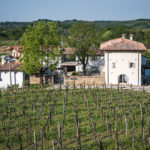
Friuli Venezia Giulia is in Italy’s far north east, wedged between the northernmost tip of the Adriatic sea and the Alps. It shares borders and a long, complex history with both Slovenia and Austria resulting in a vibrant multicultural atmosphere. This, combined with the influence of the region’s highly varied terrain, climate and landscapes which range from mountains to coastline, with plains, plateaus and hillsides in between, has always played an influential role in the local lifestyles, culinary culture and of course the wine scene.
The region is most famous for its powerful white wines – almost 90% of the region’s wines are white, with a focus on native varieties such as Friulano, Malvasia Istriana and Ribolla Gialla. The local reds, such as Refosco dal Peduncolo Rosso, Schioppettino and Terrano, are well worth seeking out too for their impressively elegant, fresh, fruit-filled and sometimes spicy character.
What to eat in FVG

Trieste, the regional capital, was under Austrian rule and the Habsburg dynasty from 1382 up until the first world war and only joined Italy definitively in 1954. The city’s majestic seafront piazza is lined with grand palazzi, while just out of town Miramare castle, built over the water in sparkling white Istrian stone, seems to appear straight out of a fairytale.
Many of Trieste’s typical dishes are simple and hearty, try them at the traditional ‘buffets’ rather rustic places where you can get a traditional meal or snack at any time, maybe goulash or boiled pork or ham with horseradish. Being a major port, Trieste has lots of good seafood restaurants too and the Tergeste DOP extra virgin olive oil made in the province is intense and high quality. As a result of its past as a free port, the city is one of Italy’s top destinations for coffee. Roasters and importers abound, historic cafés maintain the atmosphere of yesteryear and the locals even have their own words for different kinds of coffee – ask for a ‘nero’ for an espresso for example.
Udine is the main city of Friuli, the larger section of Friuli Venezia Giulia, covering the western and central parts of the region, and its past as an important part of the Venetian republic is notable in the charming architecture with decorative lines and graceful proportions. Here favourite foods include prosciutto from San Daniele, just north-west of the city and frico, a tasty blend of potato and cheese often served with polenta. Udine’s many cosy wine bars are the place to go for a taste of local life as well as the wines.
The cheeses, largely from the mountains, are a highlight throughout the region. Montasio DOP for one is a cow-milk cheese made since the Middle Ages, with a delicate flavour when young becoming more decisive yet never overpowering with age. One of the most curious cheeses is Formadi Frant, made with small pieces of various other cheeses mixed together with salt, pepper and cream. The result is surprising, with an unusual texture, very tasty, and very moreish, and it pairs perfectly with the intense, structured Friuli Venezia Giulia white wines.
QUICK FACTS on the FVG wine scene
89% of wines are white
30 thousand hectares under vine
1700 wineries
79% of wines are DOC or DOCG certified
10 DOC & 4 DOCG wines
THE WINE AREAS OF FRIULI VENEZIA GIULIA
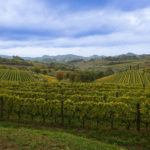
The FVG wine districts are vastly varied in terms of terrain, climate and wines, with the three star areas, where the region’s most distinctive wines are made, clustered together in the hills and plateaus to the east: Colli Orientali, Collio and Carso. Further west, the plains of Grave are where around half the region’s wines are made while the coastal areas overlooking the Adriatic sea include Friuli Aquileia DOC surrounding the fascinating ancient Roman sites of Aquileia. Lastly, the Friuli Isonzo DOC area follows the Isonzo river from the hills between Carso and Collio down towards the Adriatic. Friuli Venezia Giulia could be described as Italy’s vine nursery – around 80% of the whole country’s vines actually originate here, making it fundamental to the whole nation’s wine scene.
COLLI ORIENTALI
The terraced vineyards of the Colli Orientali (literally ‘eastern hills’) in the far north east of the region’s wine making territories are best known for their deliciously complex white wines with notable varieties including Friulano and Sauvignon. One of the region’s three DOCG denomination areas that actually lie within the Colli Orientali area is Rosazzo DOCG, for superb white blends made with a minimum of 50% Friuliano, together with Sauvignon, Pinot Bianco and/or Chardonnay and a small percentage of Ribolla Gialla. The scenery around Rosazzo abbey, which has historic vineyards worked nowadays by one of the region’s leading wineries, Livio Felluga, are stunning. The other two DOCG wines in made in Colli Orientali are sweet wines: Picolit (a luscious passito made with the Picolit variety that is very occasionally used for dry wines) and Ramandolo (also a sweet wine made with partially dried Verduzzo Friulano grapes). Colli Orientali is not only about whites of course, Refosco dal Peduncolo Rosso (which literally means red-stemmed Refosco) has a good body and fresh acidity while Schioppettino is an elegant, spicy and fresh native red from a tiny subzone around Prepotto. One of the main sights of Colli Orientali and the entire Friuli Venezia Giulia region is Cividale del Friuli, a fascinating historic town which actually gave the region its name. Founded in 53BC by Julius Caesar, Cividale later, in the sixth century, became the first capital of the Lombard kingdom. It’s on a picturesque section of the Natisone river and it’s in this area that one of Friuli’s favourite traditional cakes originates – delicious gubana made with a rich filling including dried fruit and nuts.
COLLIO
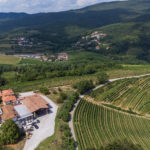
With a production protocol that only allows for vines planted on the hilly parts of the area, Collio is another of the top white wine producing territories of Friuli Venezia Giulia and Italy as a whole. The rules also call for forests to be maintained to allow for biodiversity and, together with the terrain which is largely typical ponca soil (combining marl and sandstone), create the ideal conditions for powerful wines with great ageing capacity. Collio also has its own distinctive bottle, sustainable and lightweight and although it’s not obligatory, many producers are adopting it for their wines. While the DOC Collio Bianco white wine regulations officially allow for a blend to include a wide range of varieties, giving rise to very different wines and some confusion, a small group of producers is promoting a more traditional version to include only the typical local grapes of Friulano, Malvasia and Ribolla Gialla. The Collio area is just south of Colli Orientali and includes the cross-border city of Gorizia where you can even stand with one foot in Italy and the other in Slovenia. The winemaking region itself also continues across the border – the Slovenian part of Collio is called Brda and there are various projects in place that unite the two areas. One is the windows over Collio Brda initiative that involves numerous distinctive yellow frames with a pair of facing seats at some of the loveliest viewpoints around the area. Cormons is a must-visit for wine lovers in the area, especially for the excellent Enoteca di Cormons where you can try a variety of local wines, comparing the Friulano, Malvasia Istriana and other wines from different producers with an informal tasting. The famous orange wines of Friuli Venezia Giulia, made with white grapes fermented on the skins, have their home in a small area of Collio: Oslavia. Here several producers (including Fiegl, Gravner and Radikon) have created an association to promote their area, traditions and wines. Initiatives include a 12km signposted walk with stops at panoramic spots close to each winery so it’s a great way to visit them whilst enjoying the countryside. The group has also created a genetic bank for their Ribolla vines – a vineyard nursery collecting cuttings from the best vines of each winery.
CARSO
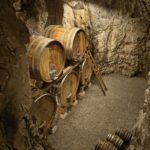
This strip of land in the south eastern corner of the region is one of the most intriguing and spectacular of all, rising up to the rocky Carso plateau behind the seafront city of Trieste. Here the characteristic erosion of the calcareous karstic stone has created curious geological phenomena of underground rivers and frequent sinkholes. The shallow and reddish iron-rich soil gives some of the region’s most remarkable wines and is frequently punctuated by rocky outcrops and caves which the locals have integrated into their buildings; producers such as Zidarich and Skerk make good use of their rocky surroundings for their wineries. The Bora, a super strong wind from the north east, which finds its way down to the city of Trieste, is a protagonist here and influences the choice of grape varieties that are naturally suited to the climate. In Carso more than anywhere in the region, the focus is in fact on the native local grapes. Wines to try include Vitovska, a fragrant dry native white, often used for skin-contact wines, that was born from a spontaneous cross between Malvasia Istriana and Glera, the area’s other two typical whites. Malvasia Istriana gives complex whites with an inviting savoury character and Glera is of course the variety for Prosecco, which takes its name from the village of Prosecco near Trieste. Here Glera, together with small percentages of Vitovska and Malvasia Istriana, is traditional for Prosekar, an appealing fruit-filled pet-nat sparkling wine, sometimes described as the predecessor of today’s Prosecco. Carso producers also make some fine fruit-filled reds including smooth Terrano and more intense Refosco dal Peduncolo Rosso. One wonderful tradition not to be missed when visiting the Carso is the Osmize – farmhouse taverns often open for just a few days at a time, serving their own wines and home produce like cold cuts, cheeses, eggs and often olives (see Osmize.com for updated openings).
GRAVE, ISONZO & the COAST
Covering a vast area in the western and central parts of the region Grave wineries make as much as 50% of the wine produced in Friuli Venezia Giulia. Grave covers a wide alluvial plain backed by mountains with stony terrain where fragrant wines are made, largely with international varieties like Pinot Grigio, Sauvignon, Chardonnay, Merlot and Cabernet Sauvignon. The river Tagliamento cuts through the area from north to south with Udine to the east of the river and Pordenone (recently named as Italy’s capital of culture for 2027) to the west. Further south towards the Adriatic sea are lovely fishing villages, such as Marano Lagunare and Grado along with nature reserves and historic sites, most notably Aquileia which was one of the most important cities of ancient Rome. Just east of here is the Friuli Isonzo DOC wine area which follows the Isonzo river valley and borders both the Collio and Carso denomination areas. The valley formed a natural border for many centuries and runs down from the hills to the sea; the river delta is a nature reserve with a visitor centre and observation hides. The pebbles of the river Isonzo, known as claps, are fundamental to the intensity of the local wines, storing the heat of the day and releasing it slowly, contributing to the maturity of the grapes and resulting harmonious nature of wines both international varieties and the local favourites such as Malvasia Istriana and Friulano.