
About Abruzzo – a wine lover’s dream destination

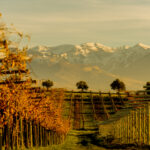
Abruzzo, at the heart of Italy’s eastern coast and roughly on a parallel with Rome, is a region that has it all. With its striking, varied coastline overlooked by hills patchworked with olives and vines and a breathtaking backdrop of lofty snow-capped mountains just beyond creating a natural boundary, the views are stunning every which way you turn. The region is especially rich in national parks and nature reserves and the beautiful countryside is dotted with wineries, castles and historical villages and towns where the local culinary traditions are upheld firmly at welcoming family-run trattorias.
Wines and vines
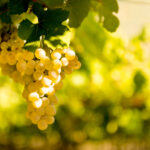
While the wines of Abruzzo have always typically reflected the generous and likeable character of the region, in recent years they’ve evolved with a stellar growth in quality. Part of the transformation is thanks to the Modello Abruzzo initiative aimed at reinforcing the local identity, allowing for subzone label mentions and creating a framework within which especially the region’s many dynamic younger generation winemakers are free to experiment. The tiered geographical layout of the region, sloping down steeply from mountains to sea within just 30km or so, makes for extreme day to night temperature changes in the vineyards, leading in turn to intensely fragrant wines with a rare elegance that producers are bringing out with passion and respect, for memorably expressive wines.
Red heroes
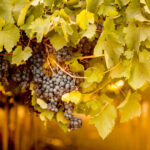
Local varieties dominate the wine scene, first and foremost Montepulciano d’Abruzzo – one of Italy’s most widely grown grapes – both for red wines with an immediate appeal when enjoyed young and with intriguing complexity when aged, and for Cerasuolo, the vibrant cherry-hued version that’s a permanent presence on the region’s dinner tables thanks to its great versatility. While some producers have been making lighter pink versions of rosé Montepulciano, real Cerasuolo is deep and vibrant in colour (the word ‘cerasuolo’ actually means cherry coloured) and the consortium is working to have an official colour range added to the production protocol.
The top spots – Abruzzo’s DOCG areas
Montepulciano is the exclusive protagonist of two of the region’s three DOCGs: Montepulciano d’Abruzzo Colline Teramane DOCG from a charming area of gentle hills near Teramo in the north of the region, and the new Casauria DOCG, officialised as recently as November 2025 for wines that age at least 18 months before release. The Casauria denomination covers a hilly inland area the heart of the region, where ancient vats carved into the rock prove the area’s age-old winemaking traditions. The region’s third DOCG, Tullum, or Terre Tollesi DOCG, is one of Italy’s tiniest denomination areas with as little as 18ha under vine around the small town of Tollo just inland from Ortona. Tullum DOCG wines include Pecorino, Passerina and sparkling whites as well as Montepulciano d’Abruzzo and a wood-aged Riserva version.
The whites
Of the region’s indigenous white varieties, Trebbiano d’Abruzzo has been gaining increasing attention and some producers (including two Abruzzo wine icons, Valentini and Emidio Pepe) age their wines to the extreme demonstrating the variety’s great capacity to evolve.
Another Abruzzo white that’s proving its potential for ageing is Pecorino. The Cataldi Madonna family-run winery, based high in the hills near L’Aquila, helped save the variety from anonymity, having pioneered single-variety Pecorino in the mid-1990s and their older vintages show the power and intensity of aged Pecorino.
Passerina and Cococciola, another pair of Abruzzo’s white grape varieties growing in popularity, are well suited to enticingly fragrant sparkling wines and some producers have been making some good still versions too.
Exploring Abruzzo
The majority of Abruzzo wines come from the Chieti province in the southern part of the region. Here, a 40km stretch of coastline flanked by a cycle path leads from the fortified old town of Ortona to the remarkable historic centre of Vasto where a bar-lined seafront terrace overlooks a wide bay of golden sands. The coast is called Costa dei Trabocchi for the curiously picturesque traditional fishing platforms built over the sea. Although many trabocchi have now been transformed into restaurants, they are such a strong emblem that the trabocco has been adopted as the official collective symbol for the region’s Abruzzo DOC sparkling wines made with local varieties by the Italian (tank) method. Travelling inland from Ortona with stops at Lanciano to see its attractive historic centre, and Guardiagrele, celebrated for its long-standing tradition in artistic wrought iron and precious metals, takes you to the majestic Majella mountain range which reaches an altitude of nearly 2,800m.asl. On a clear winter’s day, you can ski with a sea view! Nearby is the charming village of Scanno with its lovely heart-shaped Lake Scanno, as well as Castel di Sangro, hometown of one of Italy’s top chefs, Niko Romito. A meal at his restaurant, Reale (three Michelin stars), is a memorable experience and by booking one of the ten guest rooms you can also enjoy a delicious gourmet breakfast. The context is beautiful and wild, and alongside the fruit and vegetables he grows for his restaurant, the chef has a 6ha vineyard of Pecorino grapes at around 800m.asl. The resulting wine, made for him by the Feudo Antico winery, is an impressive savoury and citrussy limited edition. Heading north, the Majella massif gives way to the Gran Sasso, a magnificent sight at nearly 3,000m.asl. Lower down among the mountains from here is the gorgeous historical town of L’Aquila, one of Italy’s highest regional capitals at just over 700m.asl and the nation’s official Capital of Culture 2026. Nearby, the Navelli plateau is a top site for growing aromatic saffron, while further towards the coast Loreto Aprutino is an attractive medieval centre with panoramic views, known for its delicious, high quality olive oil, also with a dedicated museum. Throughout Abruzzo olive oils are excellent and most wineries grow olive trees alongside their vines, often the intensely flavoured local varieties of olive such as Dritta and Tortiglione. One of Loreto Aprutino’s historic palazzos is home to the region’s most iconic, elusive and long-standing wine-making families, Valentini, here since the 17th century. The winery doesn’t accept visitors and they make just three wines (Trebbiano d’Abruzzo, Montepulciano and Cerasuolo) with meticulous precision and often extreme ageing. Their bottles have become collectors’ items. Heading back towards the coast, Atri is another lovely historical centre, with a striking 13th century stone cathedral and celebrated for its licorice production. This area is the denomination zone for Colline Teramane DOCG which includes some of the very best Montepulciano d’Abruzzo made anywhere (aged for at least a year) by wineries that include Abruzzo legend, Emidio Pepe, where Trebbiano and Montepulciano wines are aged for decades, and vertical tastings are offered.
And what to eat
Abruzzo’s most classic speciality dish, which has become a veritable symbol of the region, is succulent arrosticini: skewers of diced lamb that are ubiquitous on the region’s menus, and very moreish. When it comes to pasta, spaghetti alla chitarra takes first place, often served with pallottine, or tiny meatballs, especially in the northern parts of the region. Other dishes to try in Abruzzo include the typical brodetto fish soup and the region’s cold cuts, including ventricina from Vasto, and cheeses, especially the pecorino sheep’s cheeses – memorable together with fragrant local breads such as pane marsicano, made with potato in the mix. All are ideal with a glass or two of Cerasuolo d’Abruzzo DOC.
Abruzzo wine – quick facts
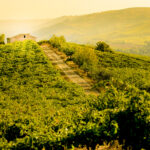
32,000ha under vine (over 50% Montepulciano d’Abruzzo)
300 wineries
3 DOCG wines
7 DOC wines
1 IGP (Terre d’Abruzzo)