
EXPLORING PUGLIA: A PATCHWORK OF WINE, LANDSCAPE AND FLAVOURS
Puglia, the region of south-eastern Italy that represents the heel of the nation’s boot-like shape, has long been a favourite among travellers in search of a warm climate and rich culture, delicious food and intense, characterful wines and olive oils. With its elongated profile stretching around 350km from north-west to south-east and as much as 800km of coastline edging the land on both the Adriatic and Ionian seas, the different areas of the region vary greatly. Grapevines, often alberello-trained, and olive trees are however a constant presence.
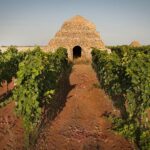
While traditionally best known for its robust red wine – much of which was shipped north in past decades to add complexity, colour, strength and bulk to many better known wines made in northern Italy and further afield – Puglia’s wine scene has always had much more to offer. Nowadays the region’s wine producers are making the most of the precious diversity of grape varieties, climatic conditions and terrains of their land. Alongside the famous reds – such as Primitivo, Negroamaro and Nero di Troia – Puglia is one of Italy’s top areas for rosé wines, both structured food-friendly versions and light, bright sips. Local varieties returning to popularity include Susumaniello grown for elegant reds and rosés including sparkling versions, particularly in central and southern areas of the region. Puglia’s white wine scene is thriving too, with increasing attention to sparkling wines – numerous surprisingly fresh and fragrant bubbly wines are being made with local varieties like Bombino Bianco and Minutolo.
PUGLIA AREAS AND WINES
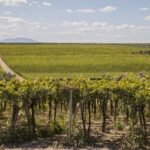
Northern Puglia – Daunia and the Gargano
Daunia is an inland area of northern Puglia with a hilly profile to the west leading to the region’s highest mountains creating a boundary with the Campania region. Here, thanks to cooler climates, the wines tend to be fresh and fragrant. In addition to the town of Troia, which lends its name to the red Nero di Troia grape, also in Daunia is the attractive town of San Severo, a centre of excellence for sparkling wines. San Severo’s compact historical centre boasts seven bell-towers and abundant decorative Baroque architecture thanks to a noble past. It’s the underground areas however that hold most interest for wine lovers – the network of ancient cellars that link up below the palazzi are being used to age much of the region’s very best spumante. Bombino Bianco is the local grape and producers are concentrating on Traditional Method versions of sparkling wine with impressive results. They are even applying for a new dedicated denomination. Heading east, the spur on Puglia’s boot shape is the wide Gargano promontory, an area of high cliffs, rocky caves and picturesque villages such as Vieste and Peschici.
Around Castel del Monte – the DOCGs
A little further south, the area around Castel del Monte is home to three of the region’s four DOCG certified wines: Castel del Monte Riserva DOCG (at least 65% Nero di Troia), Castel del Monte Nero di Troia Riserva DOCG (at least 90% Nero di Troia) and Castel del Monte Bombino Nero DOCG which, like most wines made with Bombino Nero, is a rosé. Thanks to the Nero di Troia grape’s thick skin and relatively high tannin content combined with the obligatory two years of ageing including 12 months in wood, the two red DOCGs are intense and complex wines with mature fruit notes and balsamic characteristics. The Castel del Monte Bombino Nero DOCG on the other hand is a fresh and fruit-driven bright rosé. The octagonal castle of Castel del Monte dates from the 13th century and the days of Holy Roman Emperor Federico II. It’s a UNESCO World Heritage site and a striking and bold landmark structure standing proud at 540m asl. The stretch of Adriatic coast closest to Castel del Monte also has some stunning architecture, most notably the beautiful Romanesque cathedral of Trani overlooking the sea. Andria, between Castel del Monte and the coast is the homeland of tasty IGP certified Burrata di Andria cheese.
The heart of Puglia – the Bari coast & Gioia del Colle
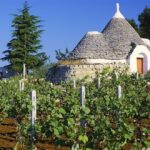
Bari, the regional capital, about half-way down the long stretch of Puglia’s Adriatic coast, is a lively port city with a stunning old town that’s a labyrinth of narrow lanes with a multitude of wine bars and restaurants serving local specialities including the celebrated orecchiette pasta. Charming Polignano and Monopoli are just along the coast as are other attractive, towns and villages such as the rather less famous Molfetta and Giovinazzo. The local olive oil is among the region’s best – look out for single-variety Coratina olive oils for the most intense flavours. Just inland, and an easy train ride from Bari, Gioia del Colle is at the heart of one of the region’s top winemaking areas. The deliciously juicy PDO certified mozzarella di Gioia del Colle is made here too and the attractive centre hosts a fascinating castle that’s worth a visit. This area is part of the vast Murge, a karst plateau that covers a large area of inland Puglia. Landscapes are characterised by dry-stone walls and trulli, the circular buildings once used as dwellings, both made with some of the many white stones that dot the area’s red clay-based soils. Olive trees and alberello-trained vines thrive here, with constant breezes and an altitude which reaches 450m asl; much of Puglia’s very best Primitivo is made in this area.
Valle d’Itria – the land of trulli
Travelling a little further south, the curious circular trulli buildings are even more in abundance at Alberobello where over 1,000 crowd the village, a celebrated UNESCO World Heritage site. This is the southernmost section of the karst Murge plateau which is characterised by sinkholes, caves and underground rivers. The attractive so-called white city of Ostuni is here, stretching over its hillside location with a maze of narrow streets and steps leading up to a 15th century cathedral. Ostuni DOC wines make good use of lesser-known native grape varieties: Impigno for the whites and Ottavianello for rosé wines. The fresh, contemporary wines of Valle d’Itria are finally gaining the recognition they deserve. Whites from both the Locorotondo and Martina Franca denomination areas are bright and youthful blends of Verdeca and Bianco d’Alessano, the variety grown more for vermouth production in the past. Both towns merit a visit, Locorotondo for its curious circular layout (which gives the place its name) and Martina Franca for its elegant Baroque centre and delicious smoked capocollo salume, made with local white wine in the mix.
Salento – southern Puglia
The southernmost stretch of Puglia is a favourite among holidaymakers, partly due to being surrounded on three sides by the sea and also for its beautiful and fascinating historic towns such as Otranto and Gallipoli. Another must-see is the city of Lecce, known as the Florence of the south for its intricate and decorative Lecce Baroque architecture in local white stone; the city even has an ancient Roman amphitheatre. The Salento area is much flatter than other parts of the region; benefiting from warm winds from both the Ionian and Adriatic seas it’s ideal especially for vines and olives. Despite the serious problems caused to centuries-old olive trees by the outbreak of xylella over recent years, producers have reorganised and are managing to continue making the area’s quality oils. Like everywhere in Puglia, the food is memorable with plenty of fresh vegetables including the juiciest tomatoes often used to top crunchy bread disks called frise. Other specialities include ciceri e tria, a tasty dish with chickpeas and pasta, part of which is fried. The wines of Salento are equally memorable, including the smooth, rich and deeply coloured Negroamaro, also used for rosé under the Terre d’Otranto and Salice Salentino denominations. Primitivo di Manduria DOC is another excellence, for wines that are traditionally more structured than the Gioia del Colle versions; the sweet passito wine, Primitivo di Manduria Dolce Naturale DOCG, is made here too.
Quick wine facts
4 DOCG wines
29 DOC wines
65% red & rosé wines
35% white wines
70% plains / 30% hills